Sunday, 12 July 2015

‘Improving efficiency only way to control nitrogen pollution’

‘Improving efficiency only way to control nitrogen pollution’

Author(s): Shreeshan Venkatesh

"Mark Mutton" Lead author of ‘Our Nutrient World’, a 2013 UNEP report
Human-induced nitrogen emissions have surpassed natural emissions, damaging the environment and human health, says Mark Sutton, lead author of ‘Our Nutrient World’, a 2013 UNEP report
How is nitrogen pollution different from carbon emissions?
The attention to carbon is about climate change. Biology and life have other important elements. Amino acids, DNA and proteins are all nitrogen compounds central to life, and we need these to grow food. But in recent years, too much nitrogen has been used. A lot of it is leaking into our environment and has disturbed ecological and greenhouse gas balances.

Considering that we have exceeded limits for nitrogen pollution, how far can efficiency increase go in mitigating the threats?

My perspective is that we should embrace the link between the effects, the emissions and the efficiency. But we cannot forget about the threats themselves. If we only focus on efficiency, we will run into trouble because of what economists call the rebound effect—efficiency increases and brings down costs, which in turn increases the demand and consumption. It is important to think about sufficiency and consumption patterns—how much do we really need to eat? In Europe, 85 per cent of the nitrogen in agriculture is used to feed livestock while only 15 per cent reaches the people. We found that if Europeans were to halve their meat and dairy consumption, it would translate to a 40 per cent reduction in nitrogen pollution across Europe. But this is a very ambitious target.

How would mitigation play on a cost-benefit ratio?

Whenever you put a value to environmental threats, you get a big number where human life is involved although there is significant uncertainty. Of all the nitrogen inputs in the ground, only 20 per cent is available to humans. The rest is lost to the environment. We evaluated the net benefits if we improved efficiency of nitrogen use from 20 per cent to 25 per cent. That valuation was based on the amount of nitrogen saving in fertilisers, the environment and health threats and the cost of implementation. The cumulative benefit came to approximately US $170 billion of which the net benefit to the farmer was US $23 billion.

Why is it only now that there have been concerted efforts in scientific circles to address the problem of increasing nitrogen pollution?

Historically, scientists, researchers and policymakers have looked at their own part of the story within their disciplines, such as water, air and agriculture. In the end, the joined perspective is forgotten. At the International Nitrogen Initiative (INI, a group of scientists and researchers working to improve nitrogen efficiency), we are trying to show how that joined perspective can help motivate change once the entire picture is drawn up together.

How do governments factor into the equation? 

The United Nations Economic Commission for Europe, comprising North America, Europe and Central Asia, has in the past discussed reduction of nitrogen pollution in the air. There was some progress as these discussions focused on transport with new engines and better exhaust systems to reduce emissions. But very little progress has been made when it comes to agriculture. So this remains a hot topic in Europe. But we have to look at the global scale. At INI, we are developing the International Nitrogen Management System which will support policy development and provide scientific assistance. We are also engaging with the United Nations Environment Programme and various intergovernmental bodies. Scientists are getting organised to deliver the science. Now governments have to get organised and work out how to link nitrogen-relevant policies.

Do you see that happening soon?

It’s a step-by-step process. At a 2012 intergovernmental meeting in Manila, many countries pushed to implement the 20 per cent improvement in nitrogen efficiency. No agreement was reached. The question is whether we are ready to reach an agreement in 2016 or 2017. We will be there to deliver the science, beyond that it would be the governments’ call.

Metamorphosis of mining policy

Metamorphosis of mining policy

Author(s): Sunita Narain 


In India, policy often becomes dead on arrival
There is a science and art of policy-making. In India, this is confounding and abstract. But what stands out is that the intent and form of policy-making begins somewhere and ends somewhere else—as it moves between desks, competing interests and even governments, it evolves or gets distorted so that the final product looks very different. But that is not the end of the matter. By the time a policy is decreed into law, the original proponents become cynical or lose interest in its implementation. Policy then becomes dead on arrival.

Let me explain why I am saying this.

In the mid-2000, mining was the sunshine sector. India was digging for minerals like there was no tomorrow. The government set up a committee under the then member of the Planning Commission, Anwarul Hoda, to suggest changes in the mining policy. This was also the time when we at the Centre for Science and Environment (cse) were researching this sector. The Hoda committee focused primarily on mineral extraction. Our focus was the interconnection between mineral wealth, forests and water—also found where minerals are found—and the fact that people who lived in these rich lands were the country’s poorest.

In 2007, another committee was formed, this time under the then home minister Shivraj Patil to examine the Hoda report recommendations. We pushed our way into this committee, making a presentation on the need to reform the 1957 Mines and Minerals (Development and Regulation) Act, or mmdr Act, to account for environmental safeguards and share revenues with local people.

  •  
  •  
  •  
Then in 2009, the Union Ministry of Mines, headed by an extraordinary bureaucrat, began rewriting the 1957 law. The first draft of the revised mmdr Act decided to make people partners in mining operations by giving them equity in mining companies. But the very idea of sharing benefits with people was too much for mining companies. The Federation of Indian Mineral Industries went as far to say that if money was given then “tribal men would drink and beat their wives”.

But better sense prevailed. It was decided that instead of equity, companies would give 26 per cent of their profits, which would be channelised directly into the accounts of the affected people. As I said, policy-making in India is confounding, so meeting after meeting was held to evolve consensus and each time it was an effort to keep the benefit-sharing provision intact.

By the time mmdr Bill, 2011, was tabled in Parliament, the original idea remained but in a different form. Instead of sharing profits, it was decided that mining companies other than coal would give equivalent royalty to the district mineral foundation; coal would give 26 per cent of the profits after tax. The law made it clear that this money was to go to the affected people. However, upa ii did not push for this bill and after two years as Parliament dissolved it lapsed.

The new nda government instead of rewriting the 1957 Act, brought in an amendment, mostly to move to auction of mines for greater revenue and transparency in allocation. In this amendment, now passed by Parliament, the provision on benefit sharing remains, but it has lost its intent. Now the district mineral foundation (dmf) is to be set up in all areas “affected by mining related operations”.

Holders of mining leases will pay to the foundation of the district in which mining is done a sum, “which will not exceed one-third of the royalty” in the case of new leases and “equivalent to the royalty” in case of old leases. The amendment lets state governments set the rules for the foundation, including its composition. But it does say that the object of this foundation will be to work for the “interests and benefits of persons and areas affected by mining related operations.”

My colleagues have calculated that dmfs in big mining districts will get substantial inflows of funds. At current royalty rates districts like Keonjhar would get some Rs 600 crore annually. It is possible to use this money for the direct benefit of the affected people as well as to invest in their future assets. Now the question is who will make the rules to ensure that the money reaches where it belongs?

By now the original proposal is long gone. However, in this case, cse as the proponent of the idea remains. The first draft of dmf rules, from Rajasthan, focuses on the use of money. It has no idea that this provision was meant to give people a stake in the rent on natural resources. It was meant to profit them so that it leads to inclusive growth. In the great Indian policy bazaar the challenge is to ensure that even this not-so-great policy is used as per its original intention and to find ways to implement it so that it can do what is was meant to do: bring change in the lives of the poor.

I will keep you posted on the updates on this issue.

International food standards revised; safe limit for lead reduced

International food standards revised; safe limit for lead reduced


Codex standards now also contain a prescribed daily intake value of potassium, a mineral known to reduce the risk of heart disease
Recognising the detrimental health impacts of consuming lead in high quantities, international food standards body Codex accepted a proposed reduction in the safe limit of lead from 0.2 mg/kg to 0.1 mg/kg in foods such as berries and other small fruits (excluding cranberry, elderberry and currant).
Meeting at the ongoing 38th session of Codex Alimentarius Commission in Geneva, Codex also reduced lead levels from 0.3 mg/kg to 0.1 mg/kg for Brassica vegetables belonging to the mustard family, except kale and leafy brassica vegetables.
Codex Alimentarius, associated with the Food and Agriculture Organization of the United Nations (FAO) and the World Health Organization (WHO), issues international food standards and guidelines.
Other changes in food standards
Codex acknowledged that increased potassium intake can lower blood pressure and the risk of heart disease and stroke and, hence, adopted an achievable intake value of 3,500 mg potassium per day for adults to be included in its Guidelines on Nutrition Labelling. Potassium is also known to have positive effects on bone mineral density.
Codex adopted another recommendation asking countries to not use certain antibacterial agents—Dimetridazole, Ipronidazole, Metronidazole and Ronidazole—in the treatment and prevention of diseases in food-producing animals. The Joint FAO/WHO Expert Committee on Food Additives (JECFA), which looks into residues of veterinary drugs in food, had advised Codex that it was not possible to establish safe levels of residues of the four veterinary drugs in meat due to lack of data.
Discussions on the first day of the Commission included other topics like pesticide residues, standard for ginseng products and safe use of food additives, the control of Trichinella spp. parasites in pork and the maximum level of a mould-producing toxin in cereal-based foods.
The Indian scenario
The Food Safety and Standards Authority of India (FSSAI) recently proposed to set maximum levels for lead for more food categories in addition to those mentioned in the existing regulations. While these limits are aligned with the initial limits set by Codex, FSSAI will now be expected to focus on the revised lead standards too.
Indian regulations on antibiotic use in food-producing animals are largely ineffective. In July 2014, Delhi-based non-profit Centre for Science and Environment conducted a study that revealed indiscriminate use of antibiotics in the poultry industry for non-therapeutic purposes. Such indiscriminate use contributes to the development of antibiotic resistance, a major global health concern today.

Climate change shrinking bumblebee habitat in Europe, North America: study

Climate change shrinking bumblebee habitat in Europe, North America: study


Pollinators unable to migrate to cooler climes northwards in contrast to other species like butterflies
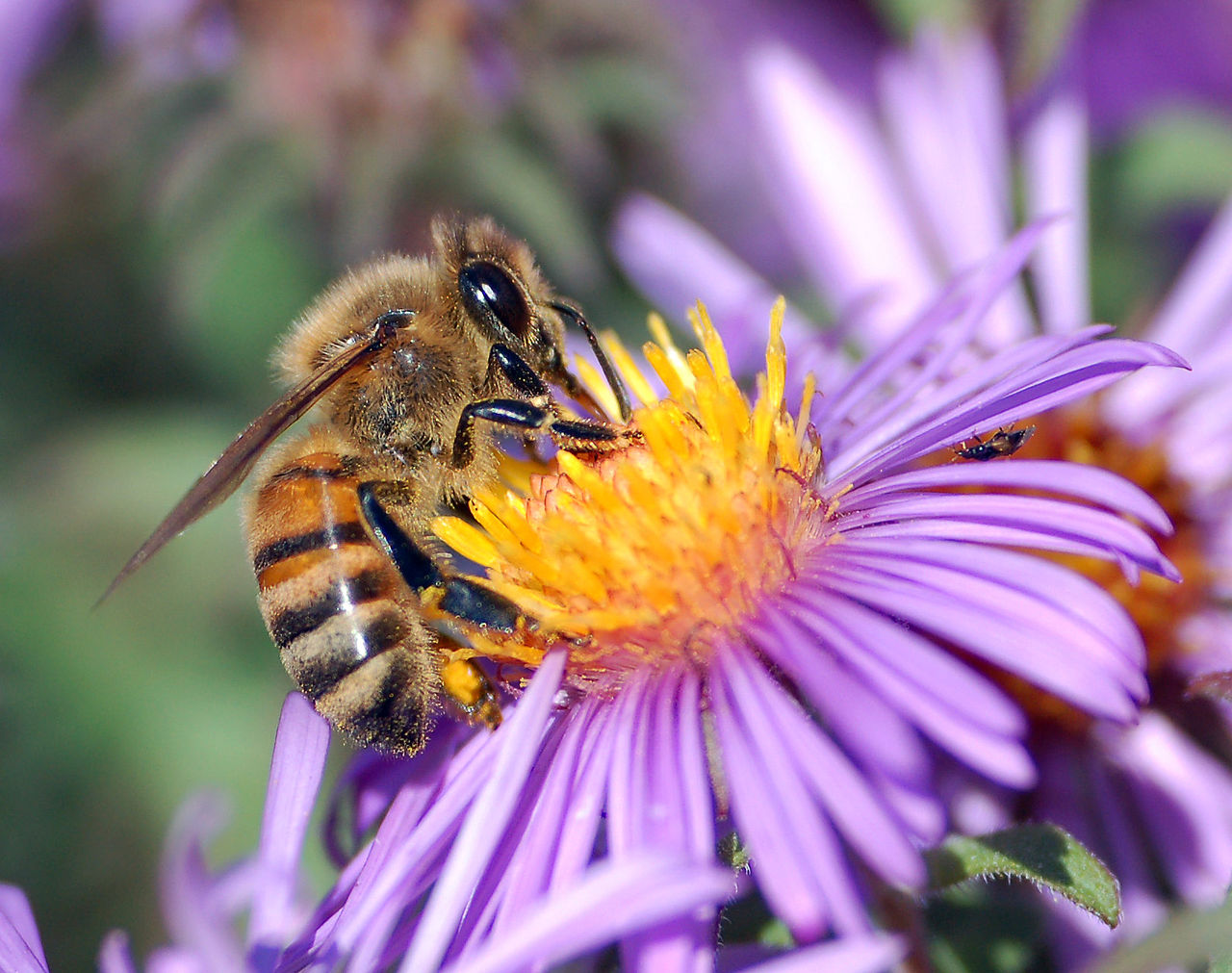
Researchers have found that European and North American populations of the bumblebee, a proficient pollinator of plants, have registered a sharp decline because of climate change.
The researchers published their findings on July 10 in the journal Science.
To carry out the research, researchers from various universities first assembled a database of 423,000 geo-referenced observations for 67 European and North American bumblebee species.
The scientists found that over the 110 years that records have been kept, bumblebees had lost about 185 miles (300 km) of their habitat range from the southern edge of their range in Europe and North America.
They also found that bumblebees are typically failing to migrate northwards as their habitat shrinks. This is in sharp contrast to what is seen in other animal species like butterflies. This unique phenomenon of bumblebees is attributed to their unusual evolutionary origins in the cool Palearctic (a zoogeographical region comprising Eurasia north of the Himalayas, together with North Africa and the temperate part of the Arabian peninsula) as suggested by the researchers of the new study.
“There is an urgent need to investigate how climate warming is endangering native bumblebee species and ways to address this,” Leif Richardson, a USDA (United States Department of Agriculture) National Institute of Food and Agriculture postdoctoral research fellow at University of Vermont who helped lead the new research told Down To Earth.
Besides climate change, factors such as land use and pesticide application were also evaluated by researchers of the new study. However, no significant correlation was found by them. "Bumblebee disappearances from warm, southern areas are just as likely when there is no pesticide use and little agriculture," said lead author of the study, Jeremy Kerr.
The research revealed threats to human well-being and health of the ecosystems. Wild bumblebees are important pollinators of agricultural crops such as blueberry, apple, pumpkin and tomato, and declines in this ecosystem service of pollination could lead to lower crop yields and higher food costs, with consequences for both, human food supply and the economy.
To mitigate the problem of declining population of bumblebees, Richardson also suggested some ground level initiatives such as reducing or eliminating the use of pesticides, providing bees with nesting, forage and overwintering habitats, conservation of natural land cover types and regulating commercial bumblebee trade.
The researchers also said that the idea of human-assisted migration of bumblebees to areas where climate may be suitable for their persistence had a bleak possibility since it was an expensive undertaking and involved unintended consequences such as accidental movement of bumblebee pathogens among species.
They added that the possibility of alternative species taking up the function of an efficient pollinator like the bumblebee was minimal since some bees are important pollinators of particular plant species, and there may not be others that take their place.
The researchers have been alarmed by seeing the sharp decline in the habitat range of bumblebees and the exacerbating effects of climate change. They expressed the urgent need to halt climate change.

Nearly 200,000 deaths caused due to sugar-sweetened beverages: study

Nearly 200,000 deaths caused due to sugar-sweetened beverages: study

‘Low and middle-income countries worst-affected’
A brand new advertisement with a twist starring real people, not actors, is going to haunt international soft drink giant Coca Cola. Washington-based non-profit health advocacy group Center for Science in the Public Interest (CSPI) has re-made a 1971 ad of Coke with a change of lyrics. It stars people suffering from diabetes, tooth decay, weight gain, and other diseases related to soda consumption. Originally in English, the ad has been dubbed into many language including Hindi and Chinese.
In Coke’s “Hilltop”, which was first aired in 1971, actors sing, “I’d like to teach the world to sing in perfect harmony; I’d like to buy the world a Coke, and keep it company.”  But according to the US-based nonprofit health advocacy organisation behind the new video, CSPI, it is time to change the lyrics.
“For decades, Coca Cola, PepsiCo, and other makers of sugar drinks have used sophisticated, manipulative advertising techniques to convince children and adults alike that a disease-promoting drink will make them feel happy and even sexy,” said CSPI executive director Michael F Jacobson. “And they are increasingly doing what the tobacco industry has done: market their unhealthy beverages in low and middle-income countries. They are investing billions of rupees in India, China, and other countries to distract us away from tooth decay and diabetes with happy thoughts. We thought it was time to change the tune.”
Jacobson said that because Indians and Chinese drink much less sugar drinks than people in the United States, Europe, and Mexico, companies see those countries are opportunities for huge future profits. However, he said, the increased marketing and consumption of the drinks will inevitably lead to increasing rates of obesity, tooth decay, diabetes, and heart disease.
India’s per capita carbonated beverage consumption was around 0.6 litres in 2013. The Chinese consumption was 1.47 litres per person in the same year. This is way below 19.96 litres among Americans and 20.61 litres in Mexicans. Even in South American countries, consumption of carbonated drinks is high. In Argentina, per capita consumption in 2013 was 16.56 litres, it was 15.37 litres in Chile and 9.72 litres in Brazil.
“With companies investing billions of dollars to maximise consumption of sugary soft drinks in India, as well as other low and middle-income countries, those nations must take steps to protect the public’s health,” said Chandra Bhushan, deputy director general, of the Center for Science and Environment in New Delhi.
A paper published in international journal Circulation shows that there were 180,000 deaths in the world in 2010 due to consumption of sugar-sweetened beverages, with 72.3 per cent from diabetes, 24.2 per cent from cardiovascular disease, and 3.5 per cent from cancers. The findings demonstrated 75 per cent of deaths in low and middle income countries.
In 2010, 2.7 million deaths occurred due to lack of consumption of fruit and vegetables. Authors of the paper titled Estimated Global, Regional, and National Disease Burdens Related to Sugar-Sweetened Beverage Consumption in 2010, argued that "compared with sodium which is nearly ubiquitous across the food supply, or fruits and vegetables which represent large and diverse classes of foods, sugary soft beverages represent only a single class of beverage."